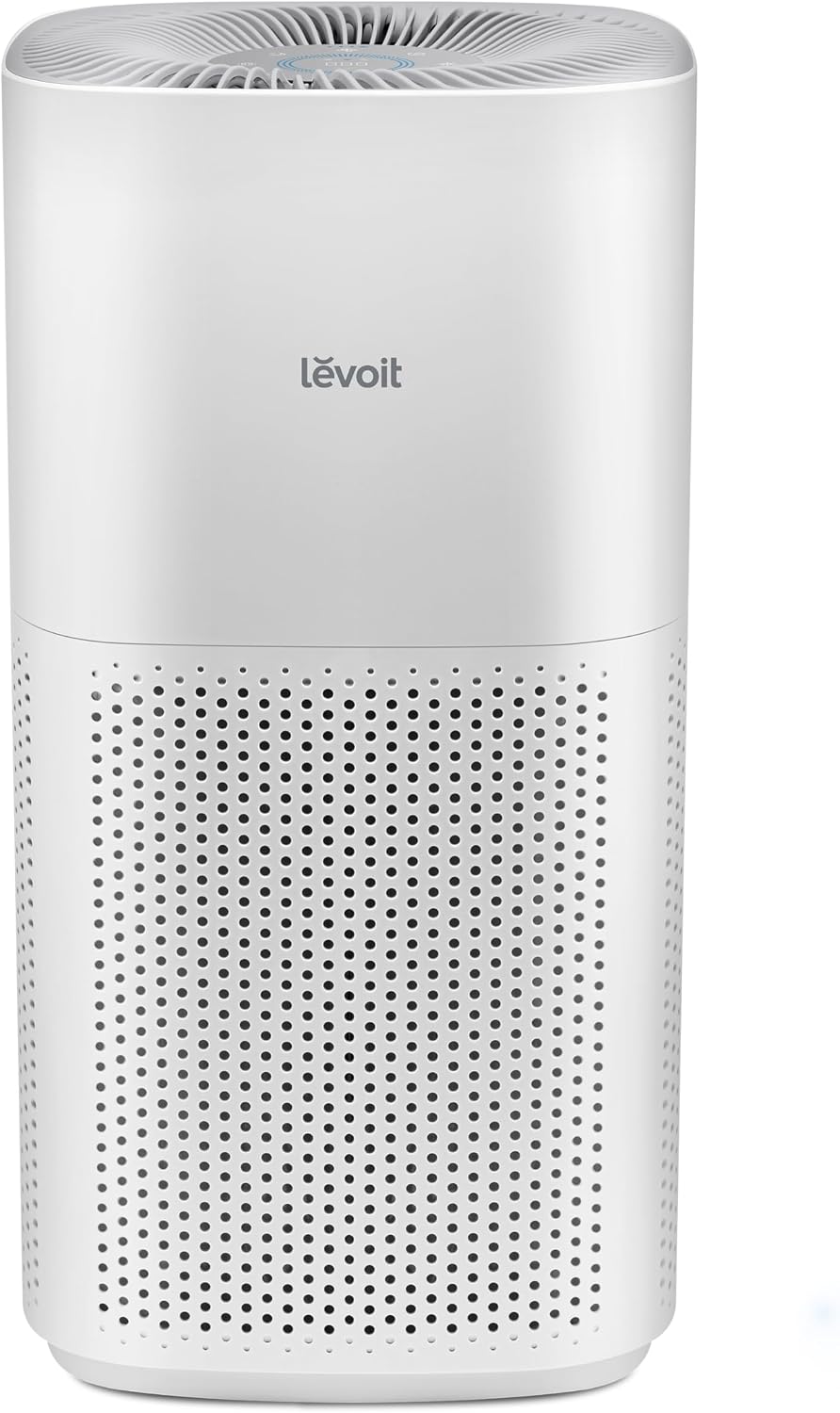
The short version
Most people buy air purifiers that are either too small (and wonder why the air isn’t better) or too big (and overspend). The fix is simple: match the unit’s CADR to your room’s size, and ignore the box’s “covers X sq ft” claims. This guide shows you exactly how.
CADR, explained
CADR (Clean Air Delivery Rate) is the independently verified rate — in cubic feet per minute (CFM) — at which a purifier removes a specific pollutant. The AHAM Verifide program tests three: dust, pollen, and smoke.
Why smoke matters most: smoke particles are the smallest and hardest to capture, so the smoke CADR is the most conservative number. If a unit performs well on smoke, it’ll handle dust and pollen even better.
ACH, explained
ACH (air changes per hour) tells you how many times the unit can clean the entire volume of air in your room in one hour. It’s the number that actually matters for allergy relief.
The conversion:
ACH = (CADR × 60) ÷ room volume (in cubic feet)
For a 300 sq ft room with 8-ft ceilings (2,400 cubic feet) and a smoke CADR of 200:
ACH = (200 × 60) ÷ 2,400 = 5 air changes per hour
That’s an excellent number — 4–5 ACH is the target for allergies and asthma.
The easy rule of thumb
If you don’t want to do the math, use this: your smoke CADR should be at least two-thirds of your room’s square footage.
- 150 sq ft room → smoke CADR ≥ ~100
- 250 sq ft room → smoke CADR ≥ ~165
- 360 sq ft room → smoke CADR ≥ ~240
- 540 sq ft room → smoke CADR ≥ ~360
This lands you near 4 ACH for standard 8-foot ceilings — right where you want to be.
Why “up to X sq ft” claims mislead
Manufacturer coverage claims often assume just one air change per hour, which is barely enough to keep a room from feeling stale — not enough to reduce allergy symptoms. That’s how a modest unit gets labeled “covers 1,500 sq ft.” Trust CADR, not the marketing number.
How to size for your room, step by step
- Measure your room (length × width, and height if it’s unusually tall).
- Multiply sq ft by ⅔ to find your minimum smoke CADR.
- Add a buffer if you have pets, allergies, or open the door often — buy one size up.
- Check the noise on low once you’ve narrowed it down; a correctly-sized unit should be quiet enough to leave running.
Common mistakes to avoid
- Matching “coverage” instead of CADR — the #1 sizing error.
- Forgetting ceiling height — vaulted or tall ceilings need volume-based sizing.
- Buying one small unit for a whole open floor plan — it can’t keep up.
- Oversizing for a bedroom — you’ll pay for CADR you never use.
The bottom line
Size by CADR, not by marketing. Match smoke CADR to two-thirds of your square footage (or run the ACH formula for tall ceilings), add a one-size buffer if you have allergies or pets, and you’ll get a purifier that actually cleans your air.