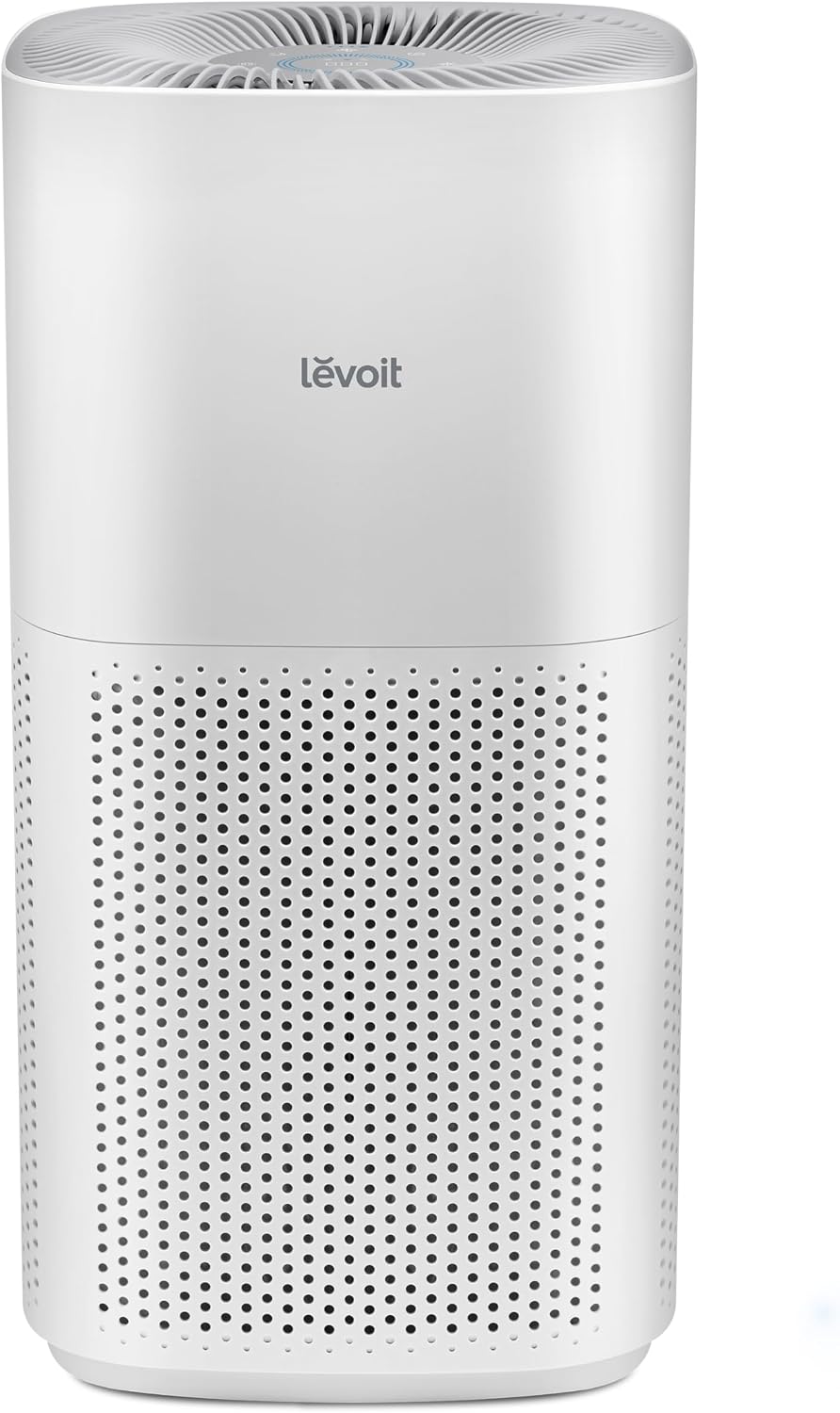
The highest-emotion, lowest-information space in the category
We analyzed 4,000 posts on r/AirPurifiers, r/Allergies and r/Parenting. The single most emotionally charged topic — the topic where people are most scared, most confused, and most likely to make a bad purchase decision — is safety.
Here are the exact questions we saw, in the users’ own words:
“My Xiaomi purifier app needs 2.4 GHz Wi-Fi so I can’t turn off the ionization from the app — is it dangerous?”
“Is the Winix D480 safe for my 3-months-premature baby?”
“I have a bird. Which purifier is safe? The box says ‘ozone-free’ but I got breathing symptoms.”
“The Costco listing has a Prop 65 cancer warning. Should I return it?”
“The purifier’s been running in the bedroom for a week. I get a headache every morning. Is it the purifier?”
Here is the honest, complete answer to each, and the framework for deciding safety for any purifier.
The three mechanisms, and which ones are safe
Every air purifier uses one or more of three mechanisms to clean the air. Their safety profiles are completely different:
1. HEPA filter (mechanical) — SAFE
A HEPA filter is a physical mesh. It captures particles by size. Particles that are too big to pass through the mesh get stuck. There is no chemical reaction, no electrical field, no UV light.
Safety verdict: Safe for babies, pets, asthmatics, and anyone. The only risk is if the filter is damaged and releases trapped particles back into the air — which doesn’t happen with a properly sealed filter in a standard purifier.
This is the mechanism you want. If a purifier has a true HEPA filter and no ionizer and no UV light, it is mechanically safe. Full stop.
2. Ionizer / Electrostatic precipitator (electrical) — CONDITIONALLY UNSAFE
An ionizer works by giving airborne particles an electrical charge, then attracting them to a collector plate. The byproduct of this process is ozone (O3).
Safety verdict: The ozone level is what matters. The EPA’s reference level is 53 ppb (0.10 µg/m³) over an 8-hour average. Above this level, ozone is a respiratory irritant. Below it, the risk is minimal for healthy adults but still a concern for babies, birds, and asthmatics.
The problem: There is no widely available, independent verification of ozone output for consumer purifiers sold outside California. CARB (California Air Resources Board) certifies models that stay below 53 ppb — but that certification is only required for models sold in California. A model sold in Texas or New York with an ionizer may or may not be CARB-certified, and the Amazon listing may not say.
The honest advice: If the purifier has an ionizer, turn it off. The HEPA filter does 95% of the work. The ionizer adds marginal particle capture (it helps with very small particles below 0.1 micron) but introduces an unverified ozone risk. For a baby, a bird, or an asthmatic, the marginal benefit is not worth the unverified risk.
3. UV-C light (light) — CONDITIONALLY UNSAFE
Some purifiers use a UV-C light to kill bacteria and viruses in the air. The UV-C light can produce ozone if the lamp coating is degraded or if the lamp is not properly shielded.
Safety verdict: A properly shielded UV-C light in a sealed purifier chamber is safe. An unshielded or degraded lamp can produce ozone and, in direct exposure, cause skin and eye damage.
The honest advice: If the purifier has a UV-C light, verify that it’s properly shielded (you shouldn’t be able to see the light from outside the unit). If you can see the UV light, the shielding is compromised. For a baby’s room, avoid UV-C purifiers entirely — the HEPA filter is sufficient for particulate matter, and there is no compelling reason to add a UV-C light.
The ‘ozone-free’ claim: what it actually means
Here’s the honest breakdown of the claims you’ll see on a box:
| Claim | What it means | Who verified it |
|---|---|---|
| “Ozone-free” | Manufacturer’s self-declaration. No independent test. | Nobody |
| “CARB certified” | Tested by or for California Air Resources Board. Verified below 53 ppb. | CARB |
| “AHAM Verifide” | Certified by the Air-Conditioning, Heating, Refrigeration Institute. Verifies CADR, not ozone. | AHAM |
| “UL certified” | Safety certification for electrical components (fire, shock). Does NOT verify ozone output. | UL |
| “Prop 65 warning” | Legal compliance label. Contains trace chemicals above a low threshold. Not a safety verdict. | California law |
The only verified ozone claim is CARB certification. If a model is CARB-certified, it’s been independently tested and verified to be below 53 ppb. If it’s not CARB-certified, there is no independent verification.
For buyers outside California: You can still buy CARB-certified models — the certification is not California-only, it’s just required for sale in California. Look for the CARB logo or the statement “CARB Certified” in the product listing.
The new-unit headache problem
This is the most common “is my purifier making me sick” complaint, and it’s almost never the purifier’s fault.
The real cause: New HEPA filters and carbon filters release volatile organic compounds (VOCs) in the first 24–48 hours. In a sealed bedroom where you sleep 8 hours, those VOCs concentrate. You wake up with a headache. You blame the purifier. The purifier is not the cause — the sealed room is.
The fix:
- Break-in period: Run the new purifier in a larger, ventilated room (living room, kitchen) for 24–48 hours before putting it in the bedroom. This lets the VOCs off-gas into a larger volume of air.
- Crack the door: If you put it in the bedroom, leave the door cracked 2–3 inches. This prevents CO2 buildup and lets any residual VOCs escape.
- Wait it out: The off-gassing is a one-time event. After 48 hours, the filter is “baked in” and the VOC release stops. The headache should be gone.
If the headache persists after 48 hours and the ionizer is off and the door is cracked: The purifier is not the cause. Look for other factors: CO2 buildup (sealed room), allergens you’re not aware of, or a moisture/mold problem.
The false-reassurance sensor
The most dangerous feature on a modern air purifier is not the ionizer. It’s the auto-mode sensor that reads falsely low.
Here’s the pattern we saw repeatedly in the research:
“The purifier says PM2.5 is ≤ 1 µg/m³ but I still have symptoms.”
“The sensor reads ‘good’ but the smoke smell is still there.”
“I bought a purifier, the screen says the air is clean, but I can still tell something is wrong.”
The sensor is a cheap optical particle counter. It’s designed to give a reasonable indication of particle load, not a precise measurement. In real-world conditions — mixed particle sizes, gases, humidity, smoke — the sensor can be off by 2–5x.
The honest advice: Don’t trust the auto-mode sensor for safety decisions. If you have a health concern (asthma, allergy, a baby, a bird), get a standalone PM2.5 monitor (a $50–100 device like a Qingping or Temtop) and check the actual number. The purifier’s built-in sensor is a convenience feature, not a safety instrument.
The per-model safety quick-reference
| Model | Mechanism | Ionizer? | UV? | CARB? | Baby-safe? |
|---|---|---|---|---|---|
| Levoit Core 300 | HEPA only | No | No | Yes | ✅ Yes |
| Levoit Core 300S | HEPA only | No | No | Yes | ✅ Yes |
| Levoit Core 400S | HEPA only | No | No | Yes | ✅ Yes |
| Levoit Core 600S | HEPA + carbon | No | No | Yes | ✅ Yes |
| Xiaomi 4 Compact | HEPA only | No | No | No | ✅ Yes (no ionizer/UV) |
| Xiaomi Smart 4 Compact | HEPA only | No | No | No | ✅ Yes (no ionizer/UV) |
| Xiaomi H13 | HEPA + ionizer | Yes | No | No | ⚠️ Turn ionizer off |
| Winix 5500-2 | HEPA + PlasmaWave (ionizer) | Yes | No | Yes | ⚠️ Turn PlasmaWave off |
| Winix 5300-2 | HEPA + PlasmaWave (ionizer) | Yes | No | Yes | ⚠️ Turn PlasmaWave off |
| Honeywell HPA300 | HEPA only | No | No | Yes | ✅ Yes |
The pattern: the “premium” features (ionizer, PlasmaWave, UV) are the ones that create safety questions. The simplest HEPA-only purifiers are the safest. If you’re buying for a baby, a bird, or an asthmatic, buy the simplest HEPA-only model you can afford.
The bottom line
For a baby: Buy a HEPA-only purifier (no ionizer, no UV). CARB-certified if available. Run it on the lowest speed that still gives you 3+ ACH. Crack the bedroom door. Break in the filter for 48 hours in a larger room first.
For a bird: HEPA-only. No ionizer. No UV. The bird’s respiratory system is too sensitive for any ozone risk, even at low levels.
For an asthmatic: HEPA-only. The HEPA filter captures the particulate triggers (dust mite, pollen, pet dander). The ionizer adds marginal benefit and introduces ozone risk.
For anyone: If the purifier has an ionizer, turn it off. The HEPA filter does the work. The ionizer is a marketing feature that creates an unverified ozone risk.
For the “I feel sick” question: It’s almost certainly not the purifier. It’s the sealed room. Crack the door. Break in the filter. Wait 48 hours. If the symptom persists, the purifier is not the cause.
The purifier is a tool. It’s not a medical device. It’s not a safety system. It’s a particle filter. Use it for what it is, and don’t expect it to solve problems it was never designed to solve.