The short version
Air purifiers work — if you buy the right one. The good news is that you don’t need to spend a fortune. A $200–$300 unit with real HEPA filtration and a decent CADR will clean your air just as effectively as models costing twice as much. The trick is matching the unit to your room and understanding the ongoing cost of filters.
What actually matters (and what doesn’t)
Here’s the honest hierarchy of what to care about:
Matters a lot:
- CADR — verified clean-air delivery rate for dust, pollen, and smoke.
- Filter type — True HEPA (H13 or better) for real particle capture.
- Noise on low — because a unit you won’t run at night is half useless.
- Yearly filter cost — the hidden price of every purifier.
Matters a little:
- Smart features — useful for monitoring, but they don’t clean air better.
- Design — nice to have, but a hidden unit never needs to look good.
Mostly marketing:
- “Covers 1,500 sq ft” claims — usually based on a single air change per hour, which is misleading.
- “HEPA-type” or “HEPA-like” — unregulated labels that often mean “not actually HEPA.”
- Ionizers and UV lights — rarely necessary; some ionizers even produce ozone.
How to size the right unit for your room
The rule of thumb: your unit’s smoke CADR should be at least two-thirds of your room’s square footage (assuming standard 8-foot ceilings). So a 300 sq ft room wants a smoke CADR of roughly 200 or higher.
Don’t trust the box’s “up to X sq ft” number — it frequently assumes only one air change per hour, which is not enough for meaningful allergy relief. We’ve written a dedicated guide on this: How to size an air purifier.
The real cost of ownership
A $90 purifier isn’t necessarily cheaper than a $200 one. Here’s the math that matters:
| Cost factor | Typical range | Notes |
|---|---|---|
| HEPA filter | $30–$60, every 6–12 months | The main recurring cost |
| Carbon filter | $15–$30, every 3–6 months | Saturates faster for odors/VOCs |
| Energy | ~$0.01–$0.10/day | Look for Energy Star |
| Pre-filter | Free–$15 | Washable ones save money |
Add it up: a “cheap” unit with $60/year filters can cost more over three years than a pricier unit with a washable pre-filter and longer filter life. Calculate the yearly filter cost before you buy.
Common mistakes to avoid
- Buying by price alone — the cheapest unit often has the highest long-term cost.
- Trusting “coverage” numbers — verify CADR instead.
- Undersizing — buying a small-room unit for a large living room.
- Oversizing — paying for coverage you’ll never use in a bedroom.
- Ignoring noise — then unplugging the unit at night because it’s too loud.
- Never changing the filter — a clogged filter cleans almost nothing.
Should you buy a Chinese-brand air purifier?
Yes — for most buyers, the best value in the air-purifier market comes from Chinese brands. Here’s why:
The two brands to know:
Xiaomi — the world’s largest smart-home company. Their purifiers (Mi Air Purifier 4 Compact, Smart Air Purifier 4 Compact) offer H13 True HEPA filtration, 400 m³/h CADR, and full Mi Home smart integration for $199–$219. They’re available on Amazon in the US, EU, and most major markets, with replacement filters stocked globally.
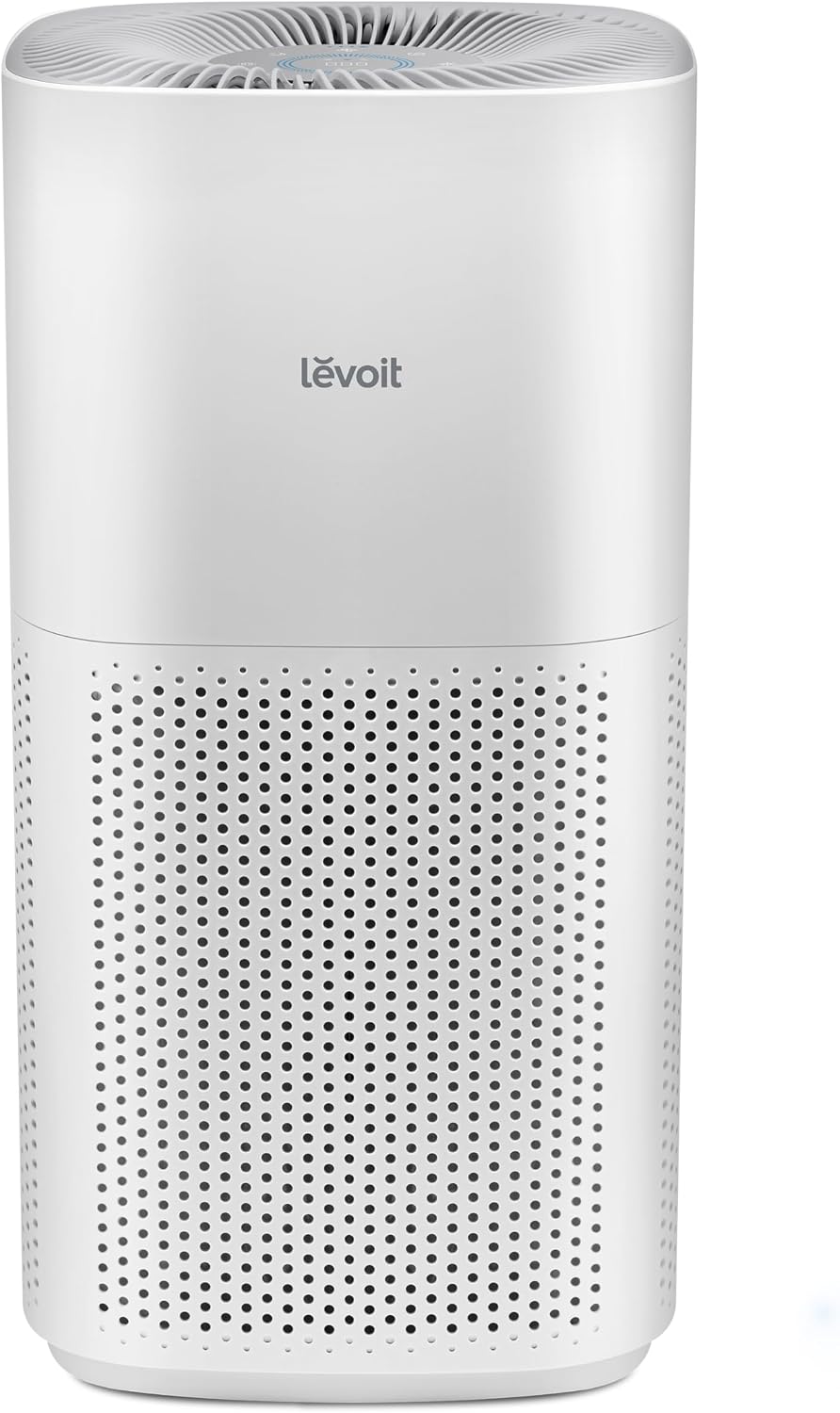
Levoit — a Chinese home-appliance company with a 50+ country presence. Their Core 300 and Core 300S are the best budget purifiers on the market, starting at ~$105. Filters are available on Amazon worldwide.
What to watch for:
- Filter availability — for Xiaomi and Levoit, this is a non-issue. For smaller Chinese brands, check that replacement filters are stocked in your country before buying.
- Smart ecosystem — Xiaomi purifiers require the Mi Home app. If you’re not in that ecosystem, Levoit’s Core 300S (which supports Alexa and Google directly) is the better choice.
- Warranty and support — both Xiaomi and Levoit offer US/EU warranties. Check the terms before buying.
Brands to skip (for overseas buyers):
- 352, IAM, 华为智选, 美的 (Midea), 格力 (Gree), 树新风 (Treeow) — these are excellent products by all accounts (they dominate Chinese review sites like 什么值得买/SMZDM), but they’re currently China-only. If you’re outside China, you’ll be stuck with no filter supply and no warranty.
The bottom line
Match the CADR to your room, insist on True HEPA, check the noise on low, and count the yearly filter cost. Do those four things and you’ll almost certainly buy the right purifier the first time — without overpaying. And for the best value, look at Chinese brands first: they offer the same filtration quality as Western brands at a lower price, with global filter availability.