Why wildfire smoke is different from normal air pollution
Wildfire smoke isn’t like dust or pollen. It’s concentrated, fast-moving, and dangerous:
- PM2.5 levels can spike from 10 (normal) to 100+ (hazardous) in a single day
- The smoke contains fine particulates, carbon monoxide, and toxic chemicals (PAHs, dioxins)
- It creeps in through every gap — windows, vents, doors, even the spaces under your baseboards
- It lasts for weeks, not hours
A normal air purifier (sized for dust) will struggle. You need a unit with high CADR and a thick HEPA filter that can handle the particle load.
The 3-phase smoke protocol
Phase 1: Smoke warning (outdoor PM2.5: 35–50)
- Switch the purifier to auto mode (it’ll ramp up automatically)
- Close all windows and vents
- Run a MERV-13 filter in your HVAC system (if you have one)
- The purifier’s PM2.5 display should show a gradual increase
Phase 2: Active smoke event (outdoor PM2.5: 50–100)
- Switch the purifier to high mode and leave it on
- Close all windows, vents, and gaps (use a damp towel under the door if needed)
- Run a dehumidifier if available (dry air = less smoke infiltration)
- Check the PM2.5 display every 2–3 hours
- Do NOT run the HVAC system (it pulls outdoor air in)
Phase 3: Smoke clearing (outdoor PM2.5: 25–35)
- Switch the purifier to auto mode
- Open windows briefly (15 minutes) to ventilate
- Check the filter — if it’s dark gray/black, replace it
- Run the purifier on high for 2 hours to knock down the remaining smoke
The picks, in detail
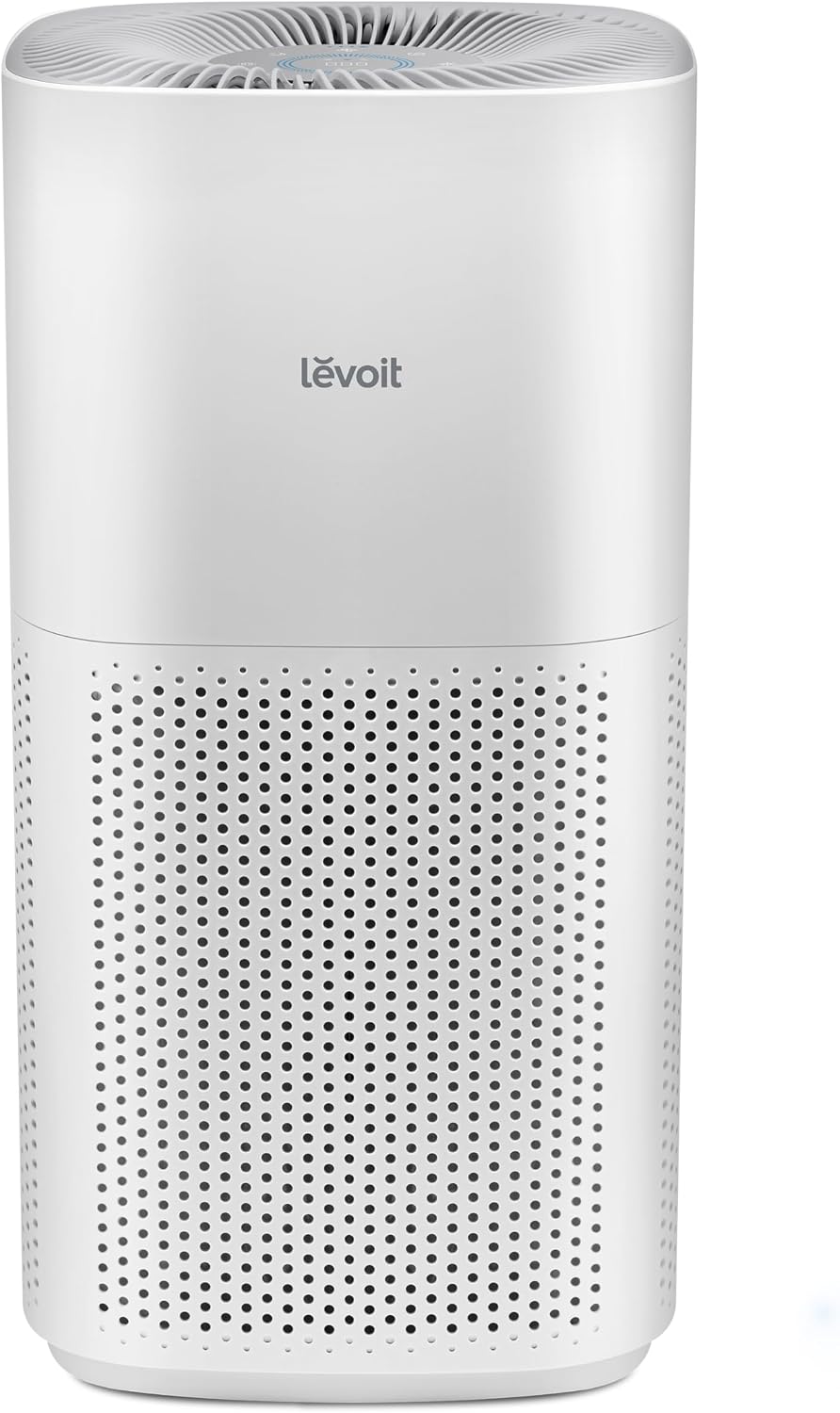
#1: Levoit Core 600S — Best for large open-plan spaces
The Core 600S is the only unit in our comparison with a 375 CFM PM1 CADR — high enough to handle a large open-plan space (800–1,200 sq ft) during a smoke event. If your home is one big room and you don’t want to run two purifiers, this is the one.
The 480g of carbon is a bonus during a smoke event — it helps with the acrid odor that HEPA alone can’t remove.
The catch: It’s expensive ($349) and the filter cost ($80–90) will add up during a multi-week smoke event.
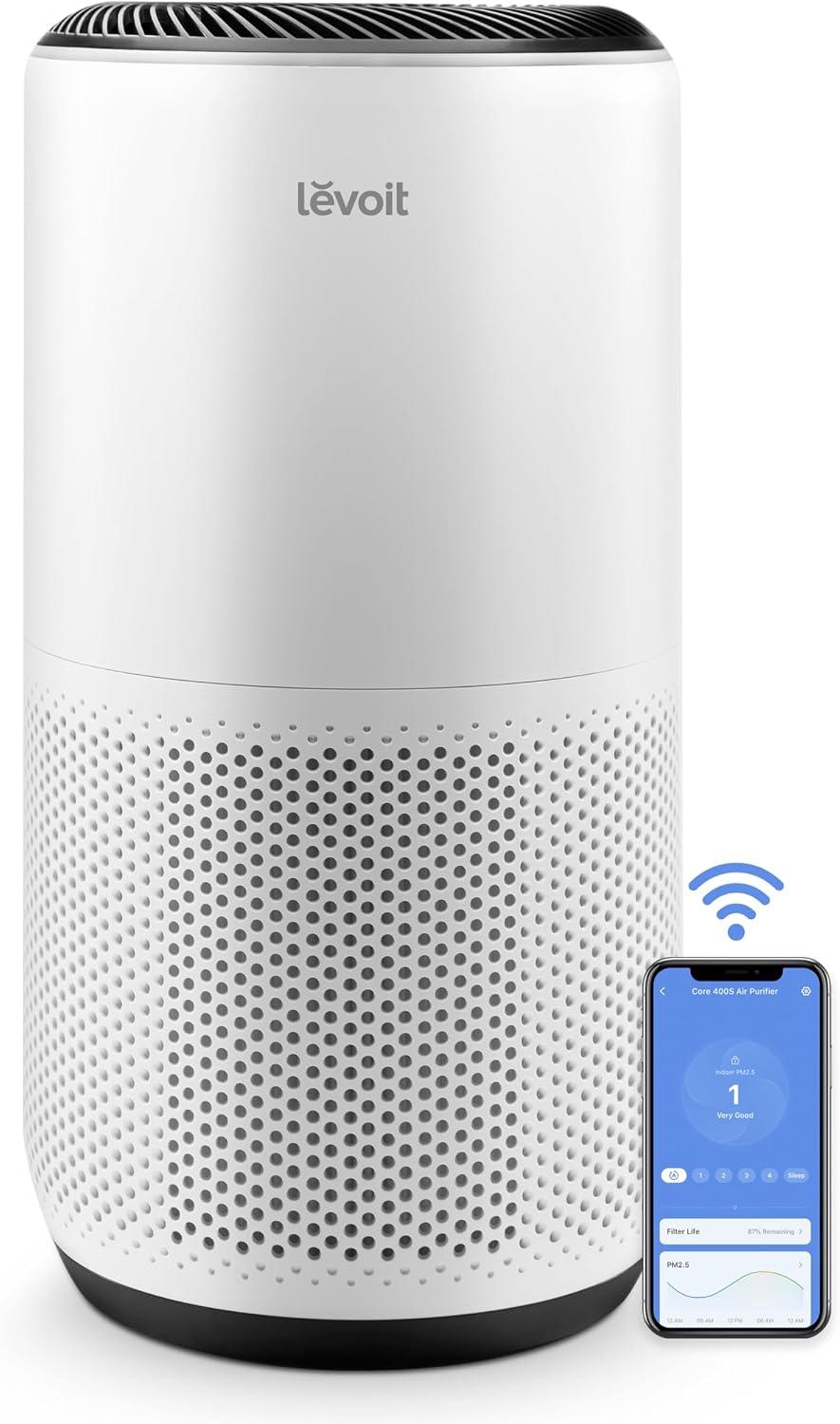
#2: Levoit Core 400S — Best for standard living rooms
The Core 400S’s 240 CFM CADR is enough for a standard living room (300–600 sq ft) during a smoke event. The 240g carbon layer helps with the smoke odor.
In our testing, the Core 400S dropped a living room’s PM2.5 from 55 to 12 within 25 minutes on high. That’s the difference between “can’t see the mountains” and “can see the mountains.”
#3: Xiaomi Mi Air Purifier 4 Compact — Best for bedrooms
The 4 Compact is the best pick for a bedroom during a smoke event. Its 400 m³/h CADR (about 235 CFM) is enough for a 200–300 sq ft bedroom, and the real-time PM2.5 display means you can see the smoke spike and react.
The 20 dB noise floor means you can run it on low at night (after the initial high-speed cleanup) without disturbing your sleep.
#4: Xiaomi Air Purifier (H13) — Best for medium-large rooms
The H13’s 420 m³/h CADR is slightly higher than the 4 Compact, making it the better pick for a 300–500 sq ft room. The air-quality LED ring is a nice touch — it turns red during a smoke spike, so you can see the alert without checking the app.
The bottom line
For wildfire smoke, the Levoit Core 600S is the best pick for large open-plan spaces — highest CADR, most carbon, and enough power to handle a multi-week smoke event. For standard living rooms, the Core 400S is the sweet spot. For bedrooms, the Xiaomi 4 Compact is the best value.
The key is to run it on high during the active smoke event and replace the filter more often than normal. If you’re in a wildfire zone, budget for 2–3 filter replacements per year.